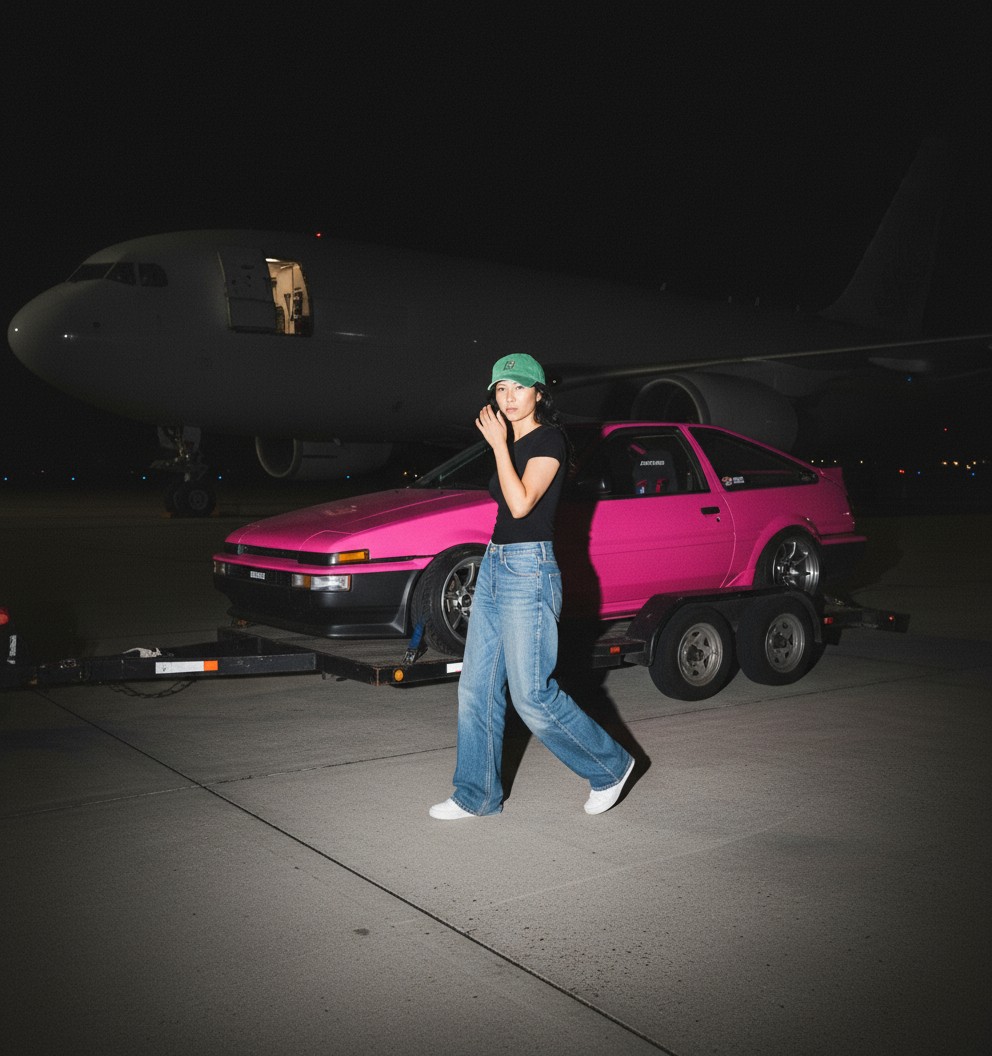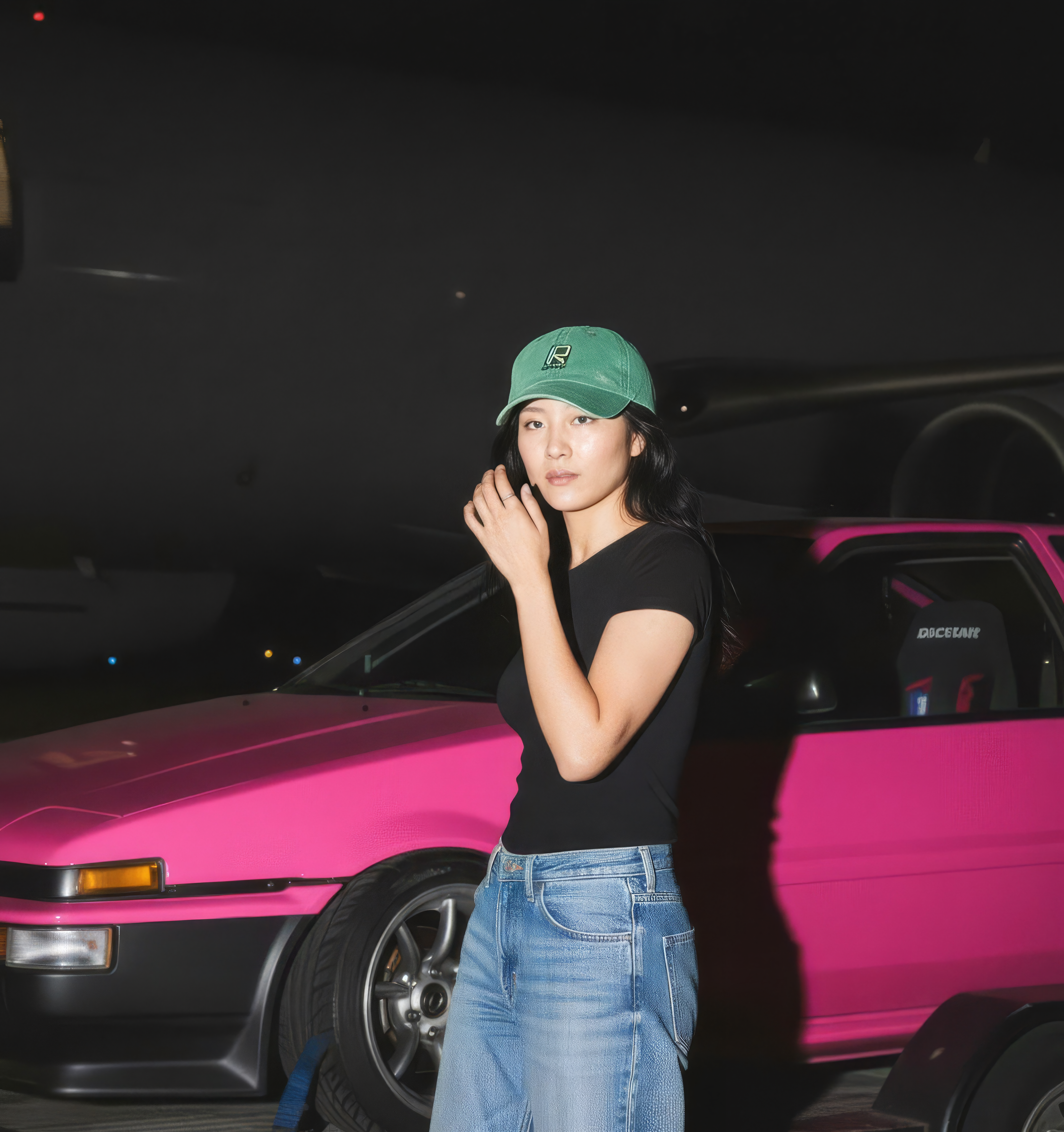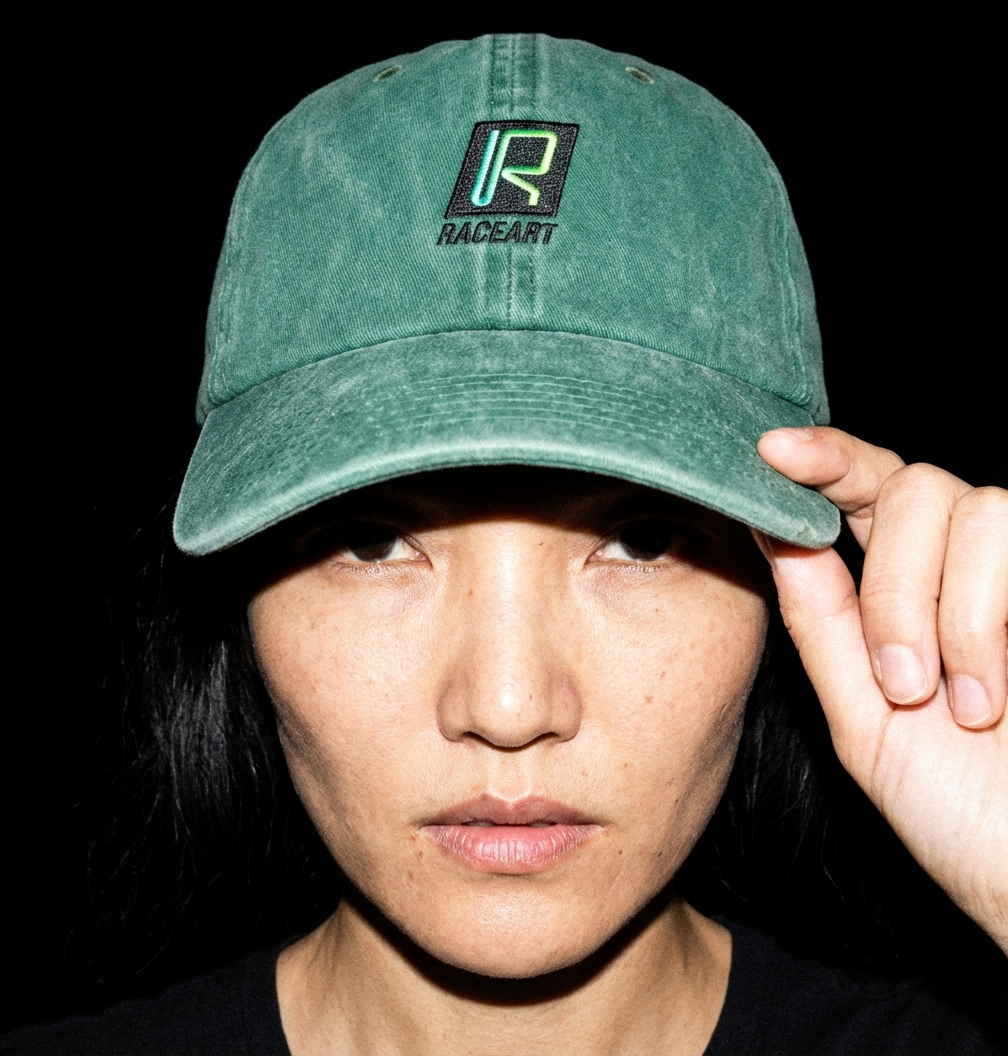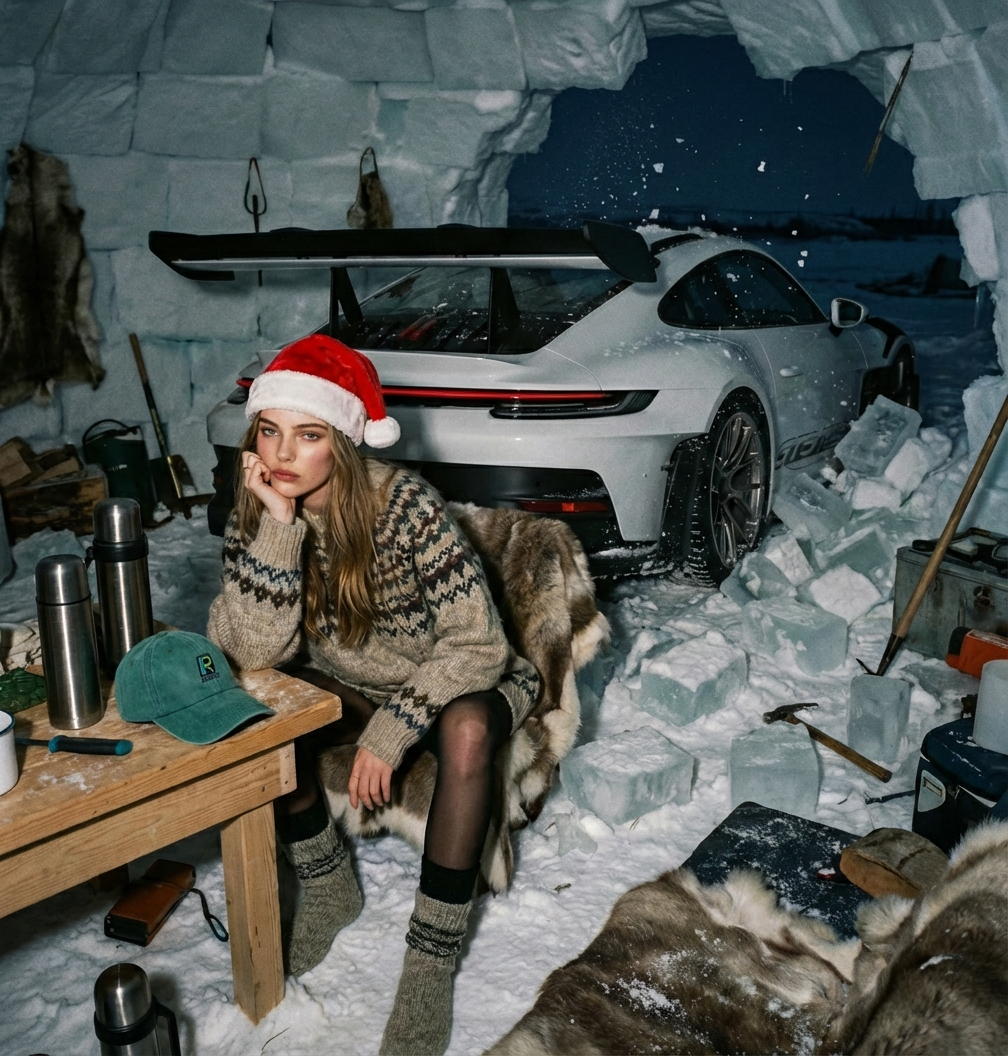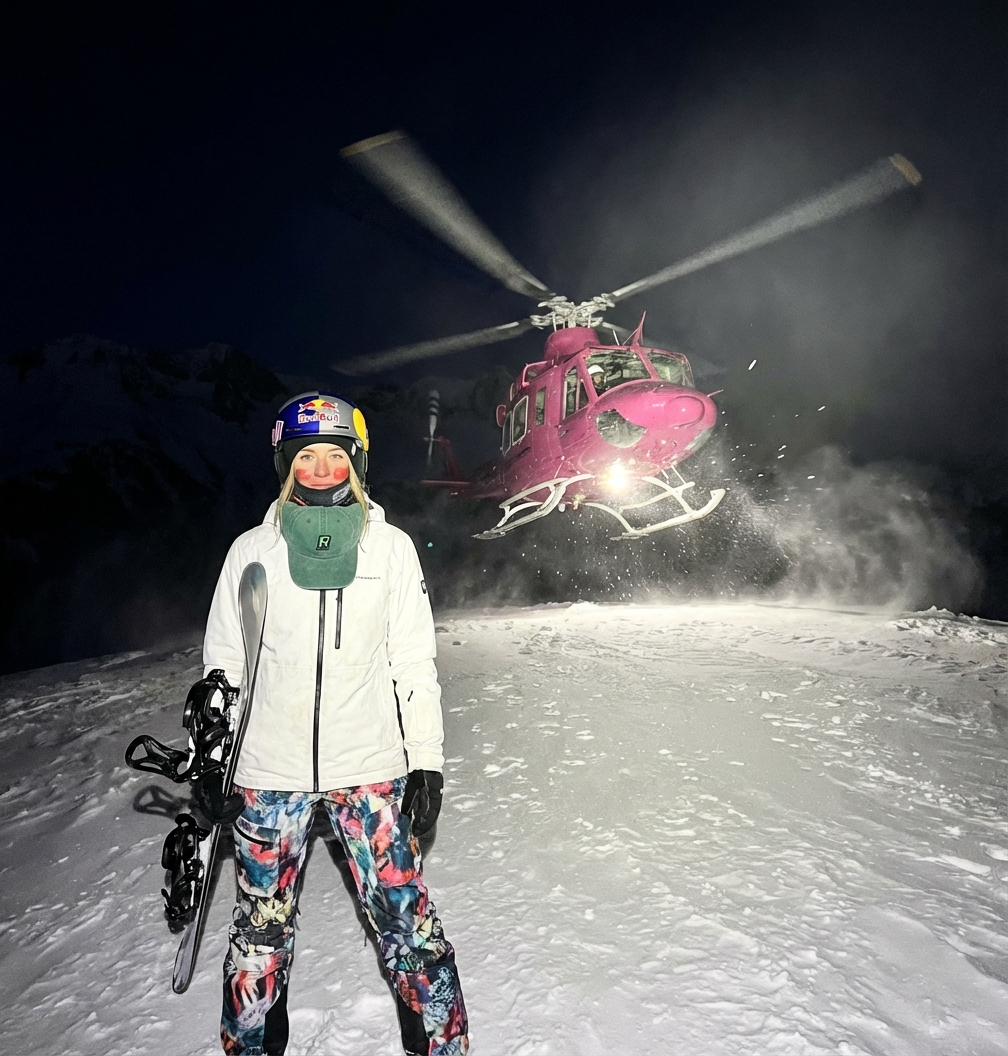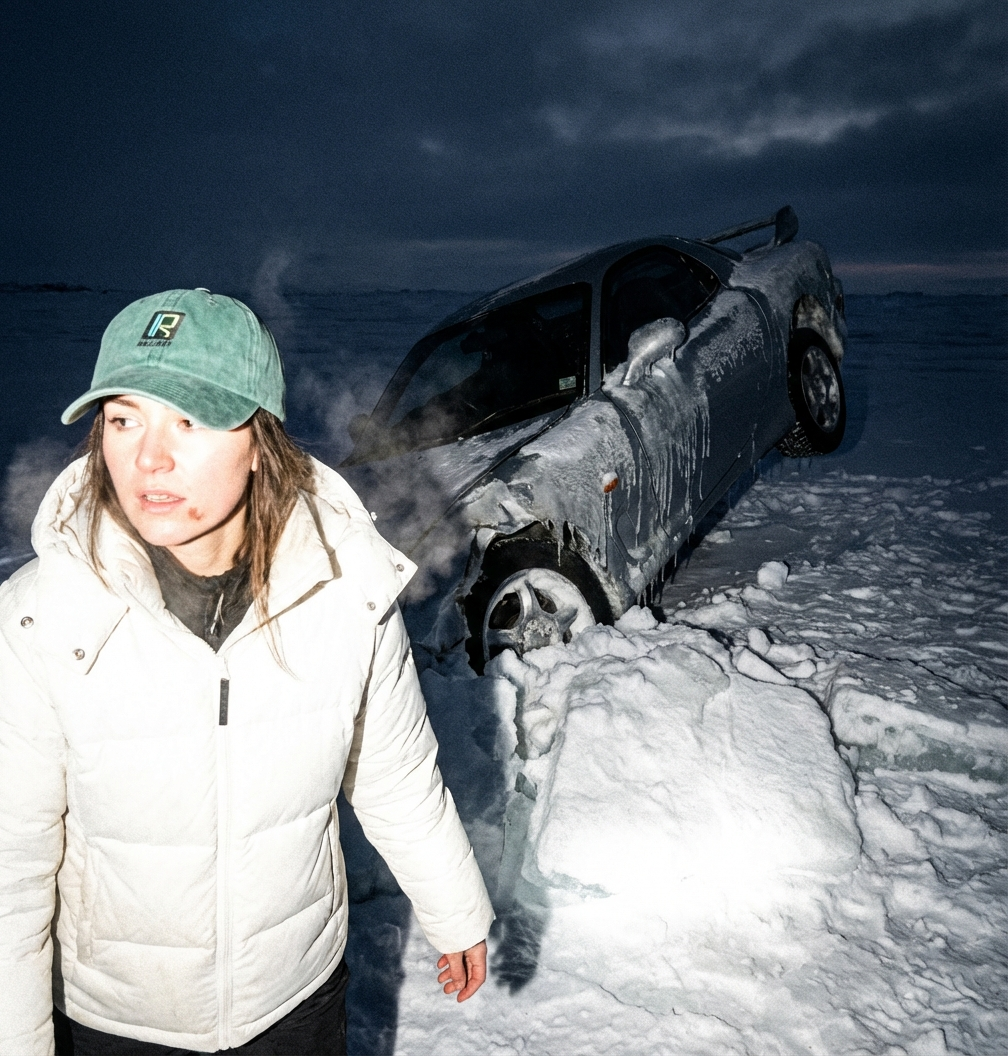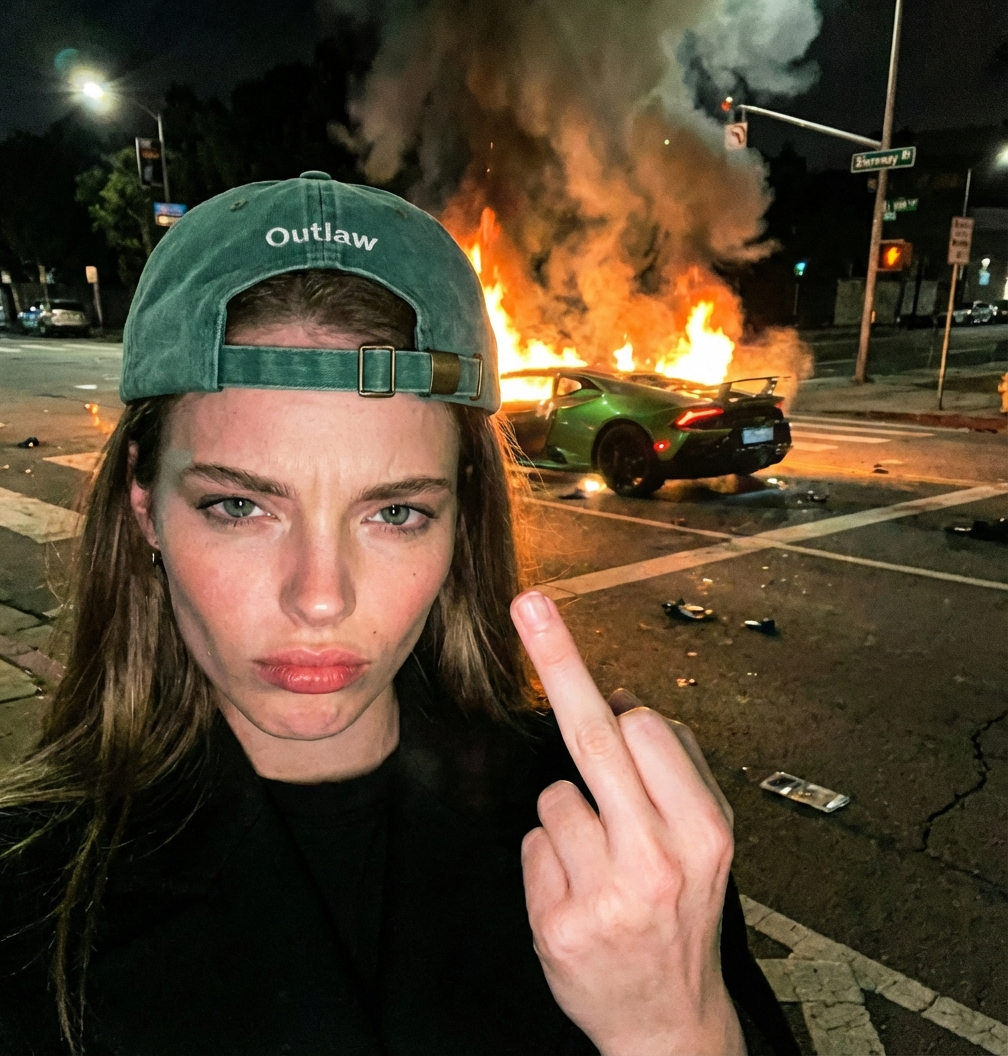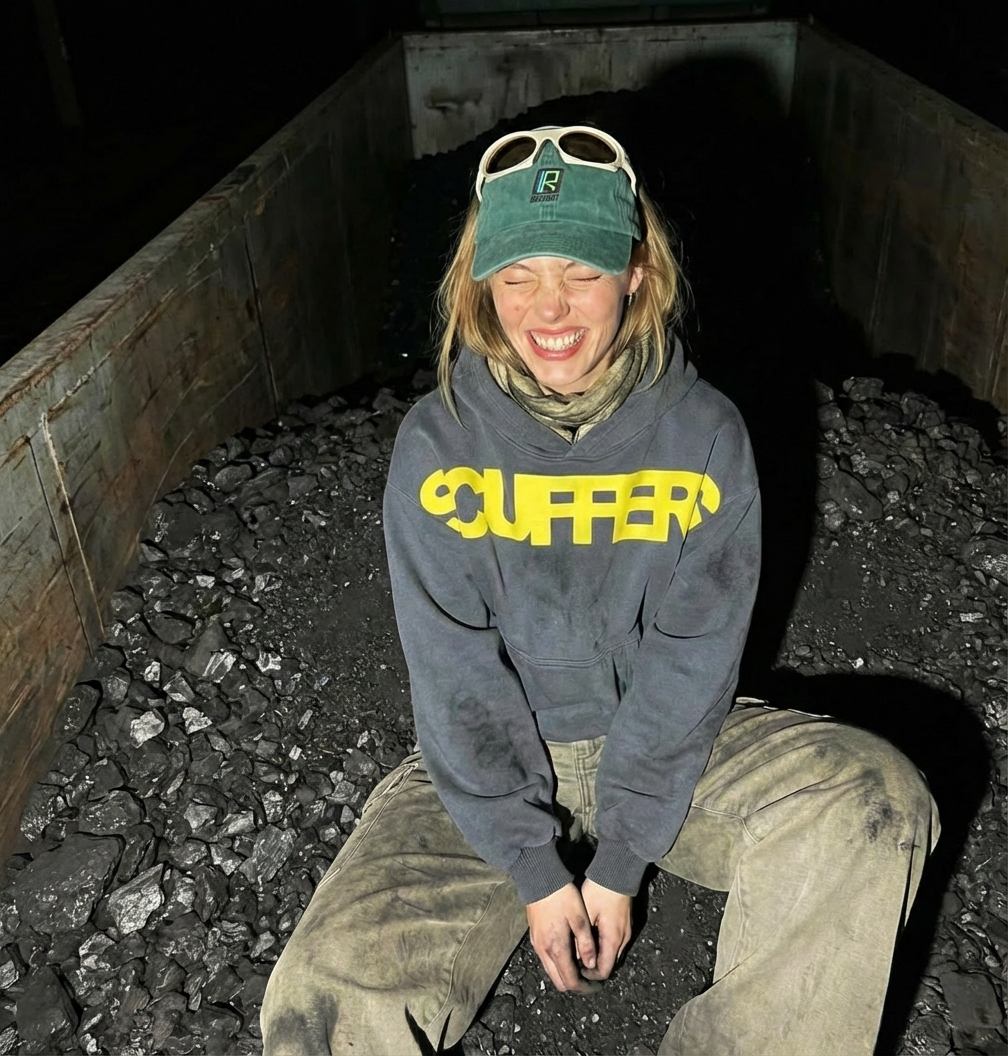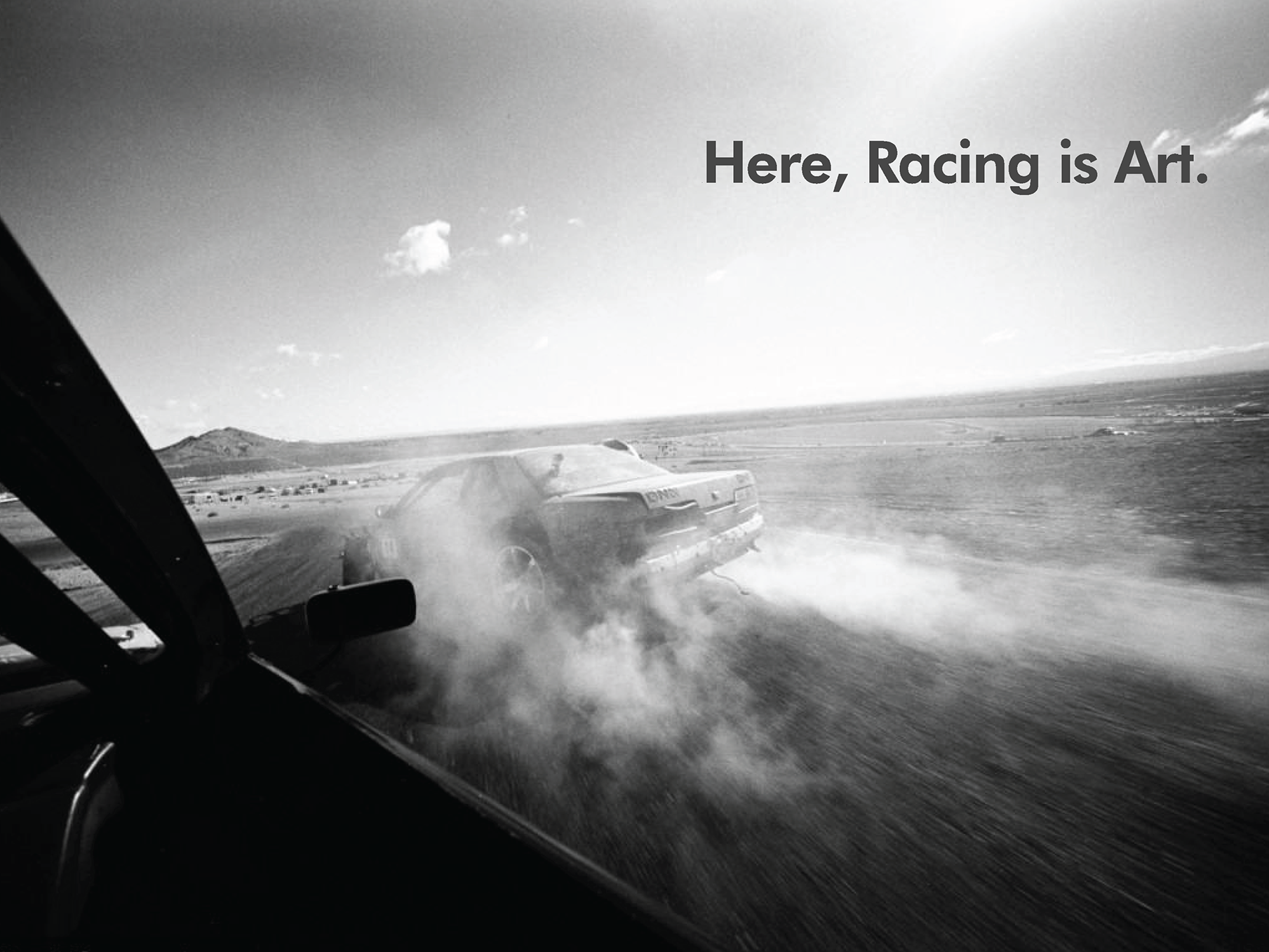
The Outlaw Everywhere campaign starts from a simple idea: the cap does not belong to one scene. It shows up in an igloo where an NSX just crashed through the wall, on an arctic snowfield next to a frozen RX-7, at an airport tarmac with an AE86 strapped to a flatbed in front of a cargo plane, on a highway overpass while an Evo IX blasts underneath, in a coal train at 2am, at a tire shop where an S15 sits on jack stands. The world escalates and the person wearing the cap stays unbothered. That tension between calm and chaos is the whole campaign.
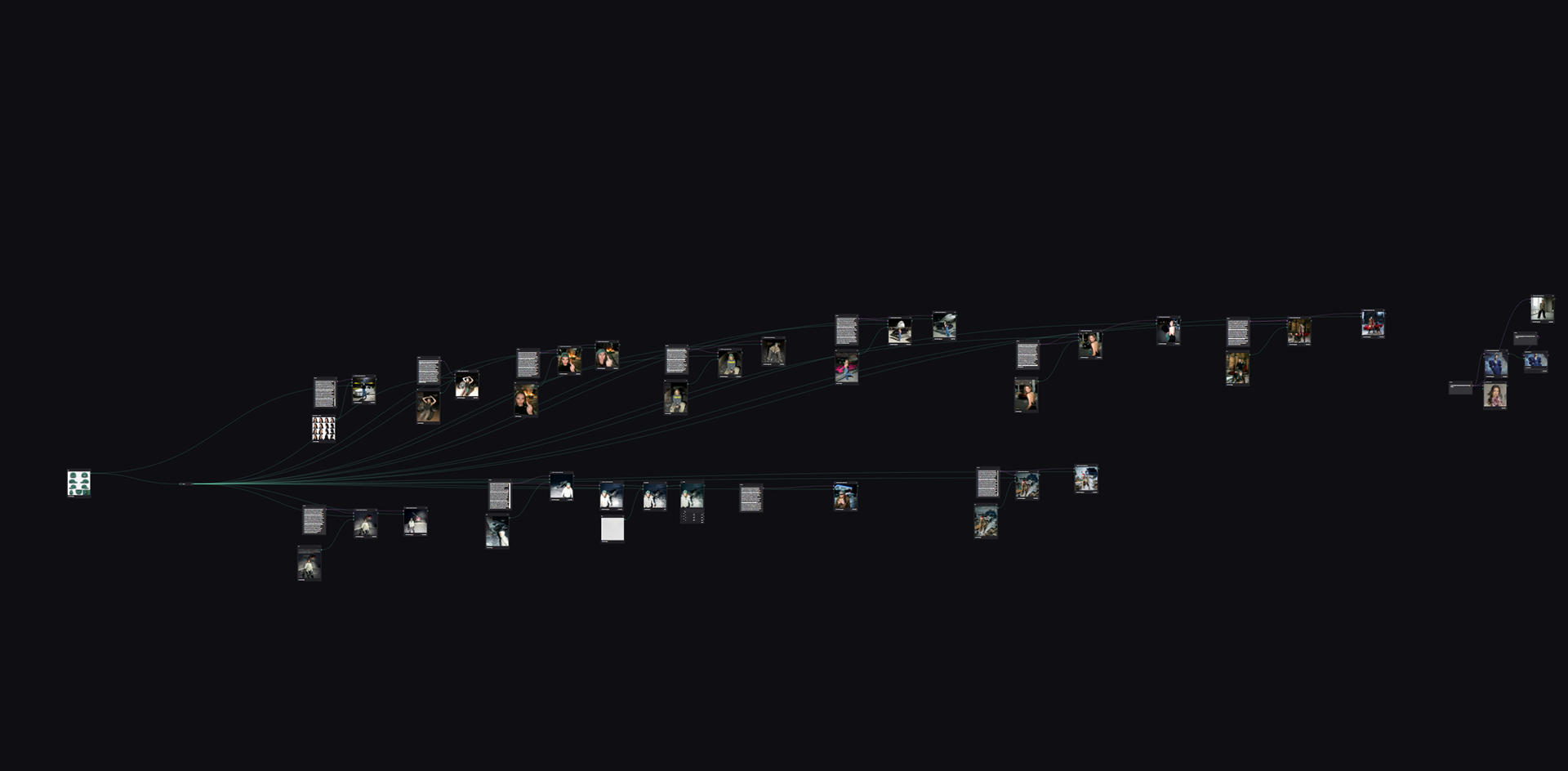
I wrote 16 prompts between 120 and 180 words each and generated images through Gemini 3 using Nano Banana Pro. Every image uses harsh direct on-camera flash as the signature lighting because it creates a paparazzi documentary feel that separates the subject from the background through light falloff. The subject reads sharp and human while everything behind them fades into darkness and grain. Every car in the campaign is JDM because that is where RaceArt lives culturally. Skyline R34s, RX-7 FDs, Supra MK4s, Silvia S15s, AE86s carry weight with the audience this brand speaks to.
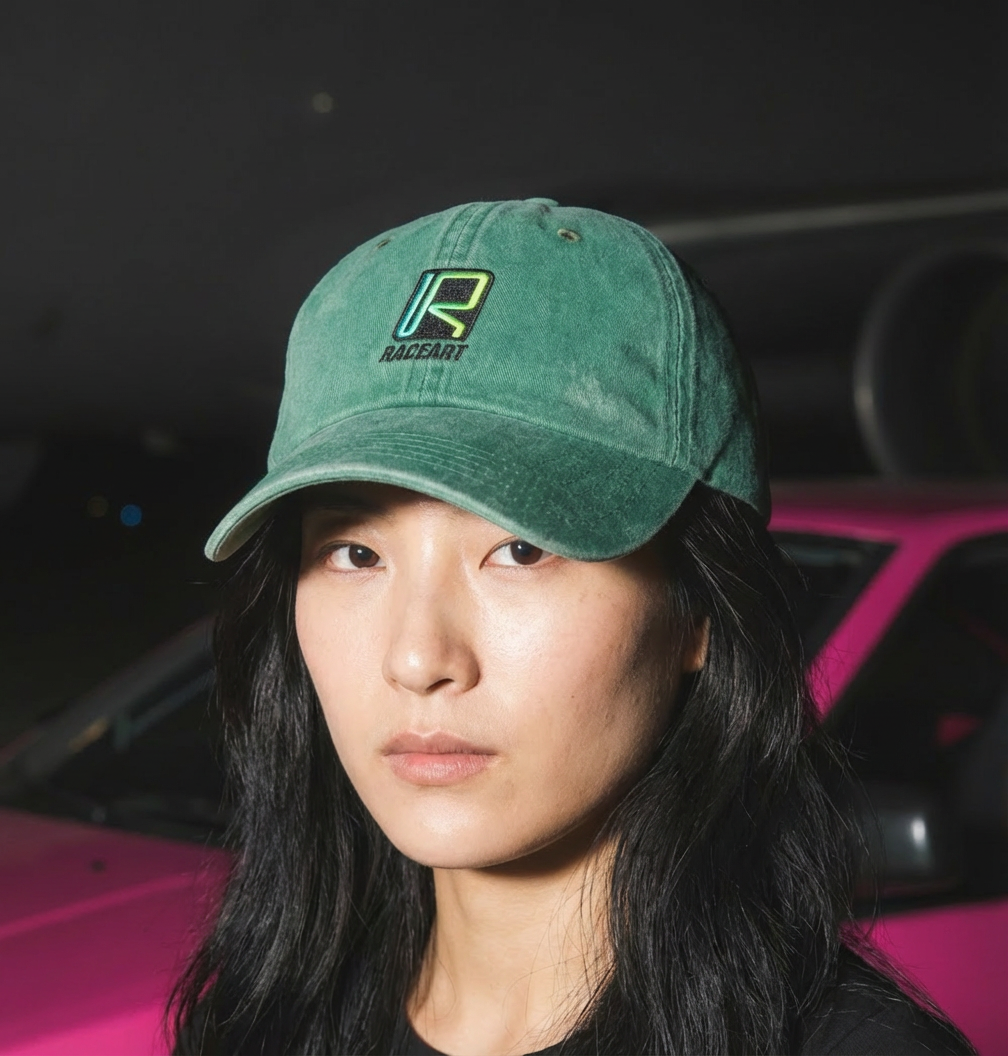
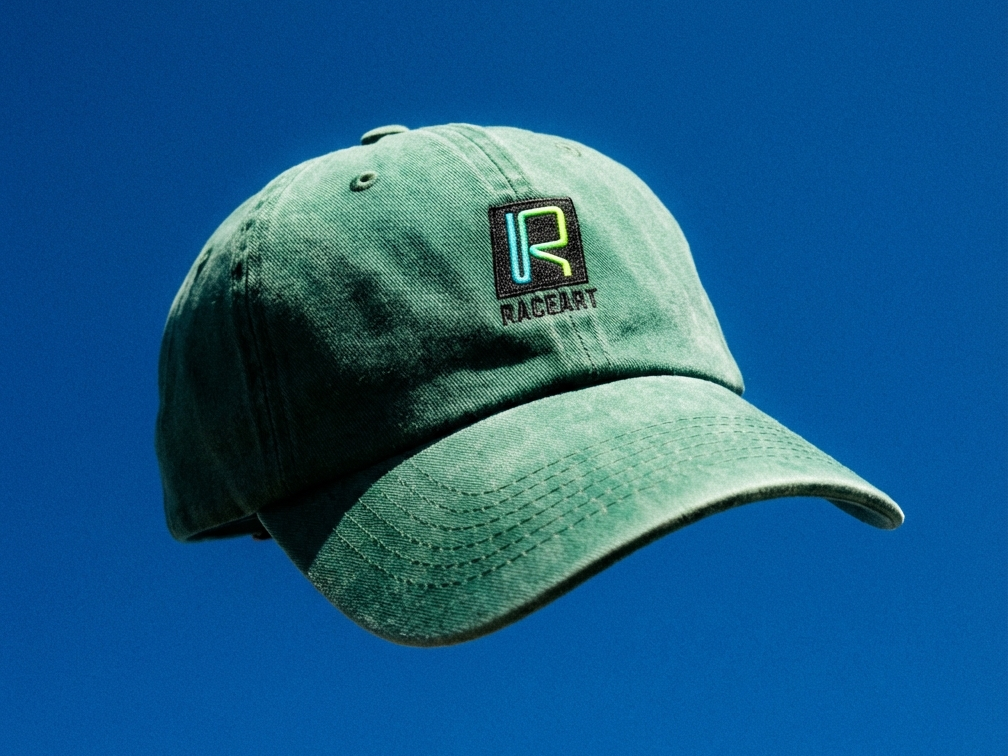
The cap appears differently in every shot. Worn backwards showing the "Outlaw" embroidery, pulled low casting shadow across the eyes, sitting on a table next to the subject, clipped to a vest strap, tucked under a helmet. That variety makes it feel like a real object moving through someone's life rather than a product being staged for a camera. The prompts focused on concrete physical details because that is what gives AI something to render. Describing a grease smudge on a cheek or coolant dripping onto concrete produces results. Describing a mood produces nothing.
The campaign gave me a full visual library for the Outlaw Cap launch and proved which visual directions land before committing to physical production with real models, cars, and locations.